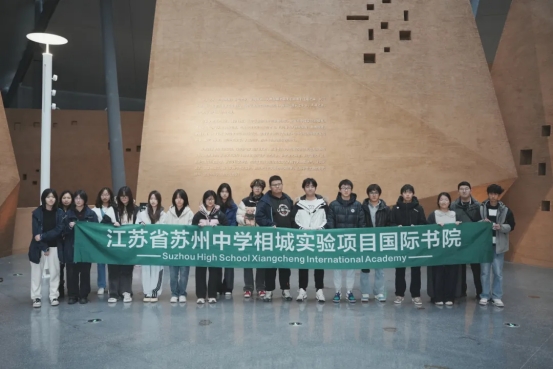
Searching for Silk Rhyme and Exploring the Soviet Union through Archaeology | OSSD Integration Course Social Practice Documentary
The ringing of the final exam bell not only marks the end of a semester for students majoring in OSSD at the International Academy, but also opens up a journey of exploration guided by culture. Recently, students from three grades of OSSD entered the Suzhou Silk Museum and Suzhou Archaeological Museum with a special task - creating immersive digital travelogues or planning virtual exhibitions - and launched a social practice activity with the theme of "Silk Charm Tracing, Archaeological Exploration of Suzhou".
Silk is the emblem of Jiangnan, and archaeology is the history of the land. Using "silk" as a guide, explore the splendor of a city; Using "ancient" as a mirror, inquire about the foundation of a thousand years. The purpose of this trip is to guide students to go beyond horse riding and sightseeing, and to touch the pulse of Suzhou's evolution from a land of silkworms to a cultural city from the perspective of creators, between the threads of silk and soil layers.

Silk Rhyme Pursuit · Between latitude and longitude:
From observer to interpreter
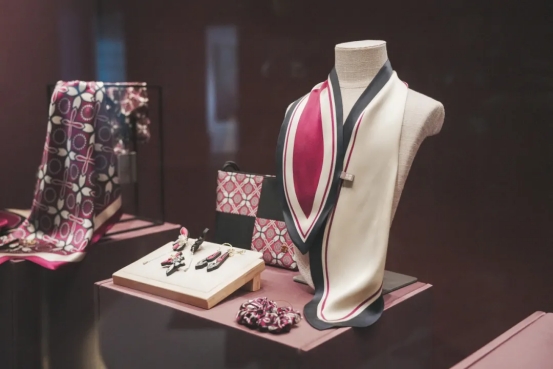
At the Suzhou Silk Museum, students' attention is particularly focused due to their predetermined "creative mission". They are not only audiences, but also collectors of materials and discoverers of stories.
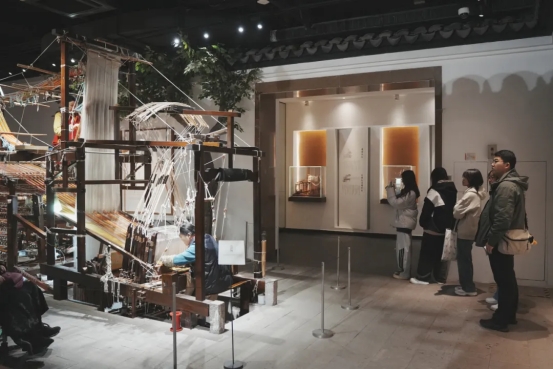
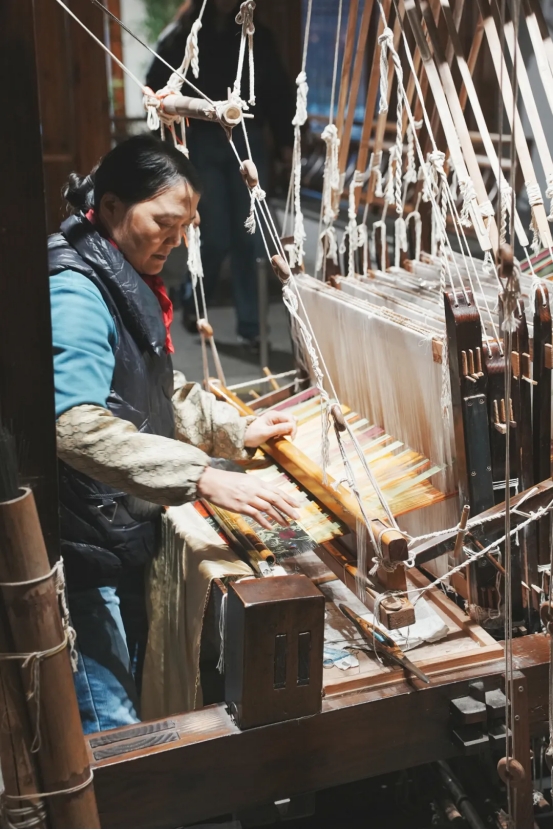
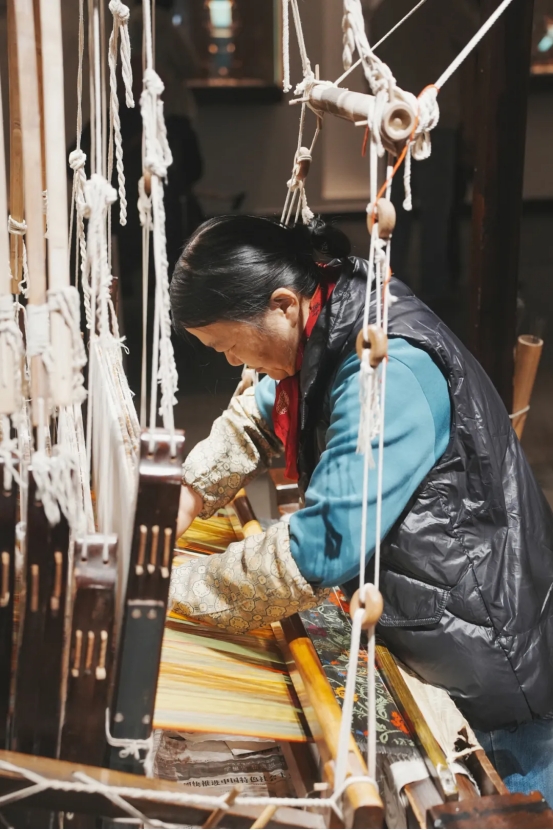
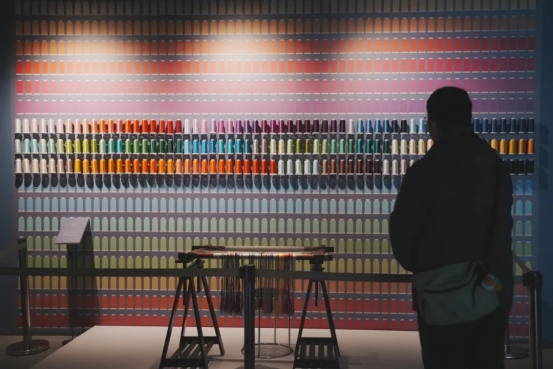
At the "Silkworm and Mulberry Residence" in the History Museum, observing live silkworms gnawing on mulberry leaves not only has curious eyes, but also quiet recording shots. This has become a vivid opening for many students' digital travelogues. At the "Weaving and Dyeing Workshop", the traditional flower weaving machine makes a rain like sound under the skilled hands of skilled masters, attracting admiration from all over. Mr. Lu carefully recorded the structure of the Song Jin Xiaohua Building loom. In her virtual exhibition "Weaving Brocade and Sculpting Song", this weaving machine became the starting point of the "latitude of technology". She wrote, "Standing in front of it, I feel like I can hear the sound of weaving machines a thousand years ago, and see the warp and weft transform into exquisite beauty in the hands of craftsmen." Ding keenly pointed out that weaving machines are the core of the Silk Museum: "I think the most important thing here is the weaving machine, and everything else is built on its foundation
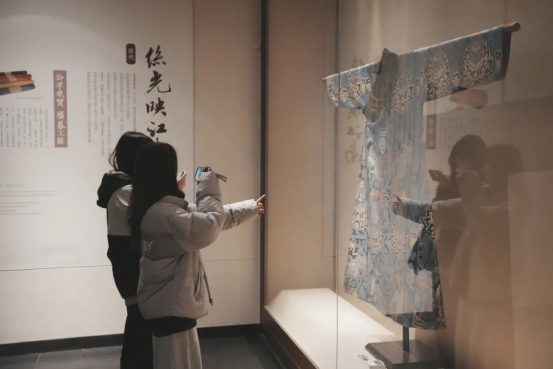
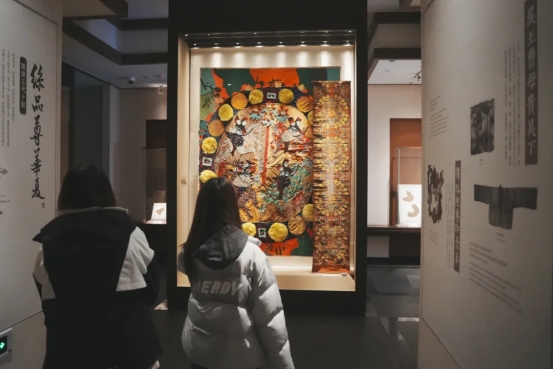
Faced with intangible cultural heritage treasures such as "Song Jin" and "Silk", some people focus on capturing pattern details to reserve visual evidence for the "Theme Photography Collection"; Some people are quietly simulating and explaining on the side, trying to capture the rational beauty contained in the technique of "connecting the warp and cutting the latitude" with language.
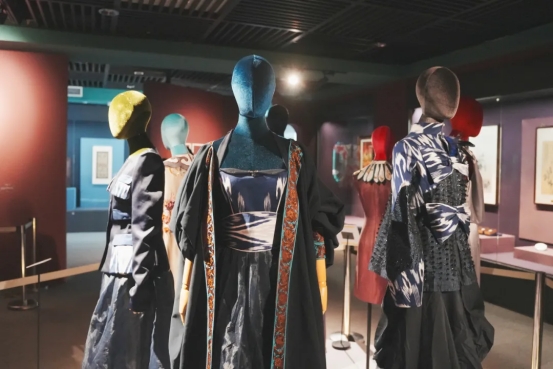
In the modern museum, the special exhibition of "Splendid China: Nishang Tongxin" has sparked thoughts on cultural integration. Ma noticed that the patterns on the clothing of Hami and Suzhou during the Qing Dynasty were so similar, which provided her with a vivid topic about the aesthetic resonance of the Silk Road.
Archaeological Exploration: Under the Loess Plateau:
From spectators to questioners
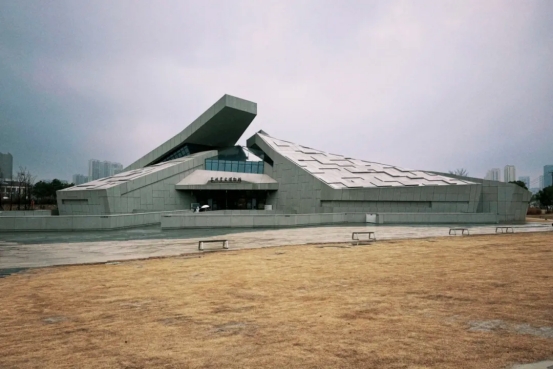
In the afternoon, the students arrived at the Suzhou Archaeological Museum located by the shore of Shihu Lake. Modern architecture is like a giant 'adze' embedded in the earth, and the atmosphere shifts from a silky flow to a thick and deep soil. Here, explore the return of the "colorful results" of Jiangnan civilization to its "silent foundation".
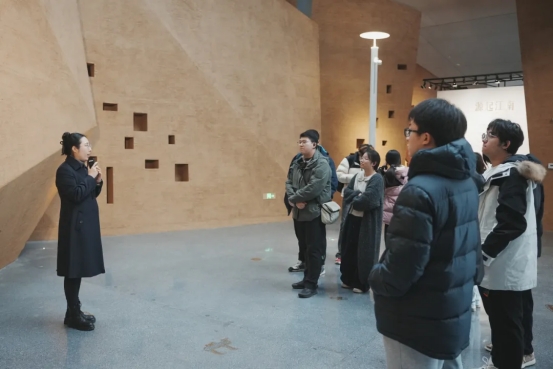
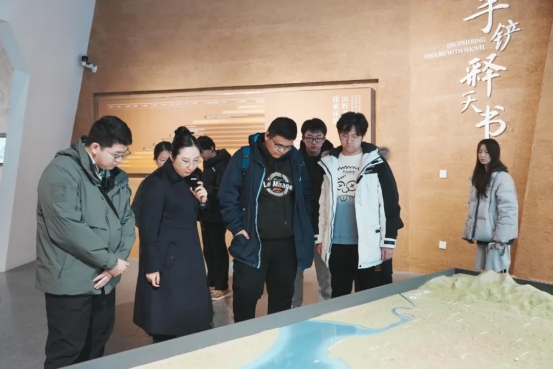
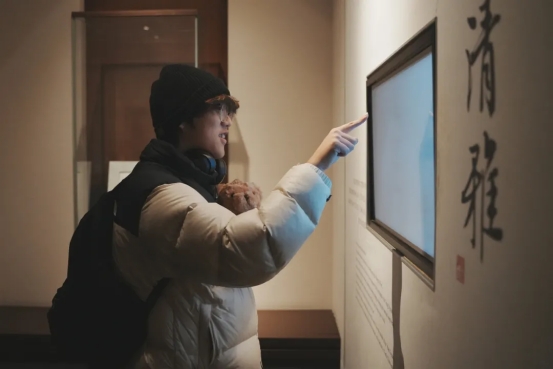
A unique interactive design in the museum attracted students: a touchable simulated stratigraphic section wall. By pressing buttons on different soil layers to feel the differences in hardness, abstract time series instantly become perceptible. In his video log, student Xuan described that "rammed earth is the most compact, while ash pit soil is relatively soft".
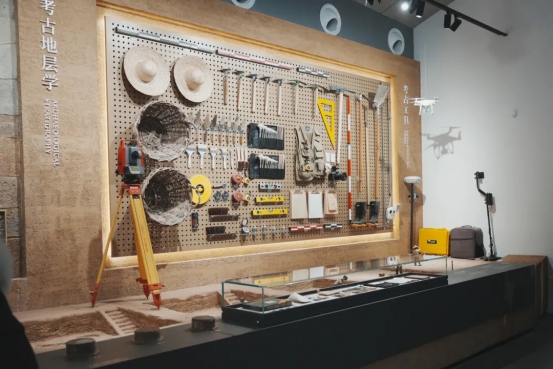
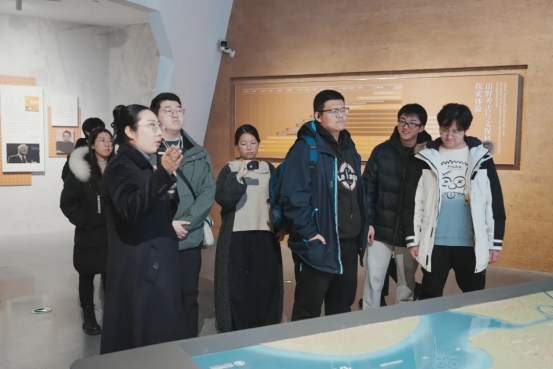
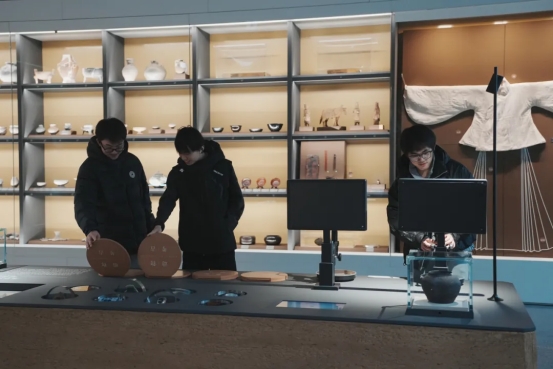
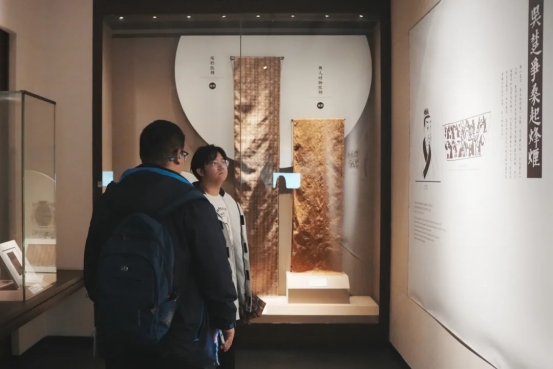
In the exhibition area of Jincheng New Village Site, a fragment of a tube tile with Qin Xiaozhuan's "right" character stamp has become the focus of many students' shots and thoughts. It is no longer an isolated cultural relic, but a crucial 'historical evidence'. Some students have decided to use it as the core of their curation in their conception, because this tile proves the location of Kuaiji County in the Qin Dynasty and provides a solid archaeological coordinate for the urban construction history of Suzhou.
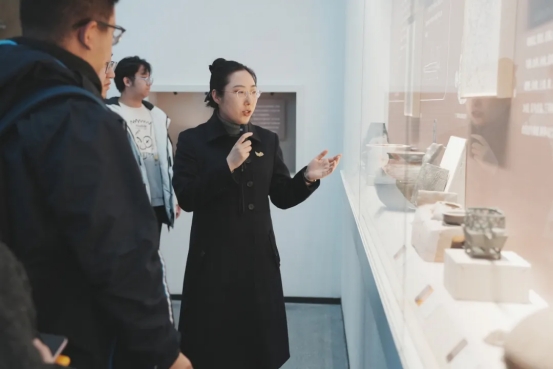
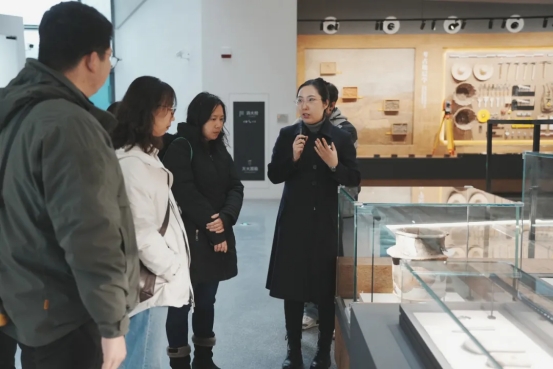
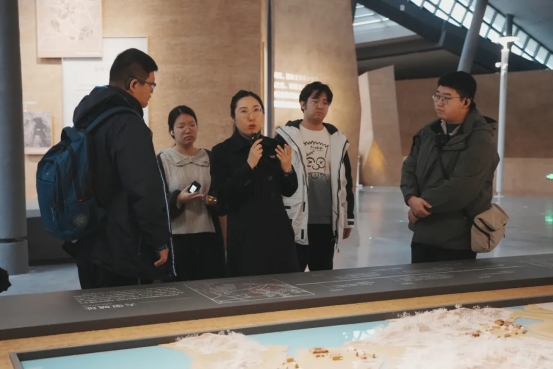
Entering the newly restored tomb of Huqiu Road in the Three Kingdoms period, the huge tomb chamber and dim light and shadow create a strong sense of presence. How to transform this immersive experience into an infectious online display? Some students are already brainstorming interactive pages for hierarchical analysis. The overlapping display of the "Pingjiang Map" and the current map highlights the cultural resilience of "a bridge name spanning eight hundred years".
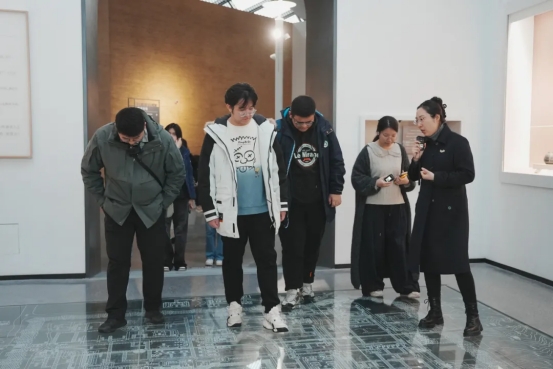
Here, students are no longer recipients of information, but active discoverers and interpreters. They are not only touching the soil layer, but also the annual rings of civilization evolution; Interpreting not only objects, but also the code of historical logic. The interactive design and physical display of the museum together form an open classroom, inviting every student to personally knock on the door of history and listen to the distant and clear stories told by soil and stone.
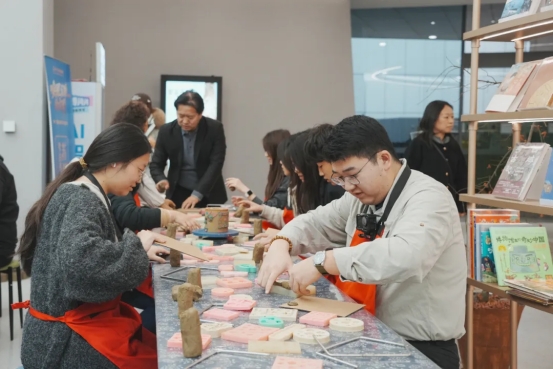
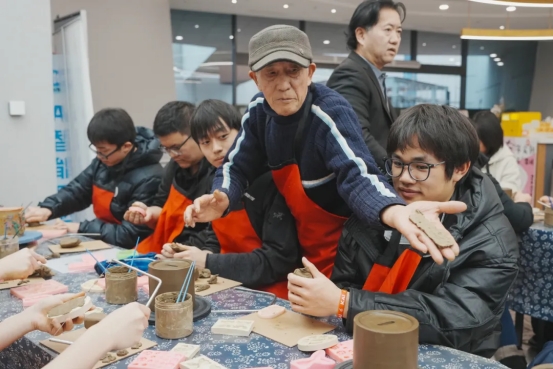
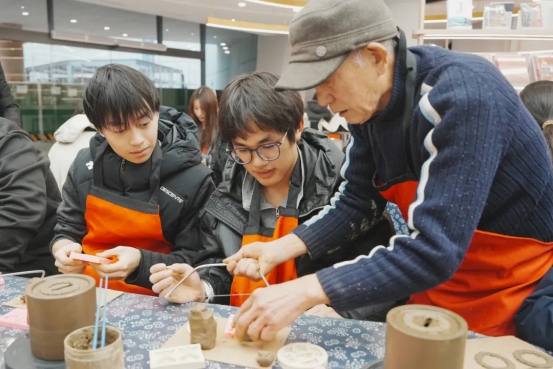
From visitor to narrator
After completing the study, the real creation begins
In his curatorial reflection, Xie summarized, "What curators need most is cultural insight and logical thinking. Museums not only display artifacts, but also convey cultural connotations, allowing tradition to live in the present
She realized to her classmates that "the most important skill in curation is storytelling. We need to make objects talk to each other and communicate with the audience." Through the order of exhibits from "luxury to simplicity," she guided the audience from astonishment to reflection, understanding that history has both beautiful art and daily life.
Zuo chose a blue background and simple fonts in her virtual exhibition to "highlight the texture and connotation of the objects themselves." This design thinking originated from her observation of cultural relics at the booth, where she noticed the unique texture of the objects under light.
Slide up and down to view
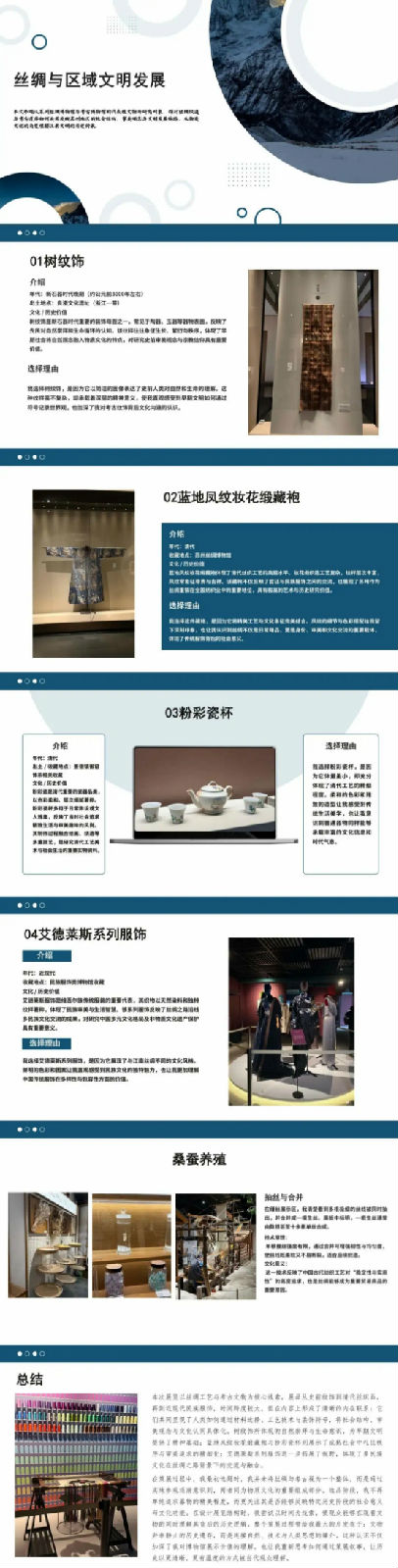
Through in-depth comparative research, Lu discovered that the tomb figurines of the Song Dynasty were more realistic than those of the Tang Dynasty. This allowed her to gain insight into the profound evolution of funeral concepts from divine to secular behind them. As a result, in "Weaving Brocade and Sculpting Song", she constructed a civilized narrative that interweaves "technology" and "faith".

Afterword:
Anchor the coordinates of culture while walking
This study, due to its clear academic tasks, has become a highly focused 'cultural field investigation'. Students enter historical sites with a sense of questioning, actively engaging in dialogue with cultural relics through the lens, notes, and contemplation.
In the end, what they delivered was not only a standard assignment, but also a complete cultural understanding practice: how to observe, how to ask questions, how to verify, and how to convey their understanding of the cultural context in a rigorous and creative way.
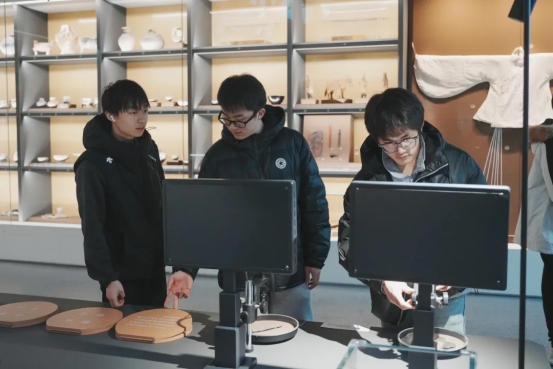
When young minds shuttle between the splendor of silk threads and the depth of soil, they accomplish far more than just the accumulation of knowledge. This is a method acquisition and perspective establishment. This may be the most precious gift that education can bestow: in the process of touching the texture of history, one gains the composure and confidence to examine the present and face the future.